Helmet comfort is not a minor detail - it is an essential part of your combat efficiency. Even the most expensive helmet will fail to perform if it doesn’t fit properly. This article provides a clear, step-by-step guide on how to determine your correct size, avoid common mistakes, and choose a helmet that becomes an extension of your head rather than a burden.
Why does size matter? A helmet is not just a piece of gear. It distributes impact energy, holds mounts for night vision devices, headphones, masks, or cameras. An incorrect size means not only discomfort but also the risk of displacement during a blast wave or impact. In combat conditions, an extra centimeter can cost a life: the helmet must fit tightly, stay in place, not press on the temples, and not "move around" while in motion.
How to measure your head correctly
• Step 1. Prepare your tool: a regular measuring tape or a soft sewing tape.
• Step 2. Determine the measuring line: wrap the tape around your head - 1 cm above your eyebrows and slightly above your ears. The tape should pass over the widest part of the back of your head.
• Step 3. Record the measurement: the number you get (in centimeters) is your head circumference.
• Step 4. Match the measurement with the manufacturer’s size chart:
| Size | Head circumference, cm |
|---|---|
| M | 52–55 |
| L | 56–59 |
| XL | 60+ |
Tip: if your measurement is between two sizes, choose the larger one, but make sure the adjustment system allows for precise fitting.
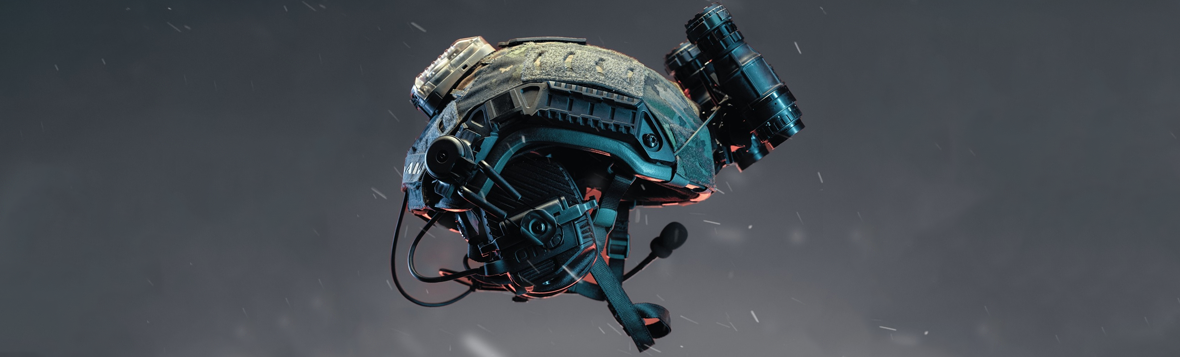
How to know if your helmet fits properly
• Fit: the helmet should sit snugly but not cause pressure.
• Balance: when you tilt your head forward or sideways, it should not move or shift.
• Chin strap: it should be tight but not restrict breathing.
• Field of view: helmet edges should not block peripheral vision.
• Comfort: keep in mind that a balaclava or active headphones add extra volume.
Common mistakes to avoid
• Don’t buy a helmet “for later”: even a few millimeters of free space create play that can lead to injury.
• Don’t ignore head shape: different models fit oval or round heads differently.
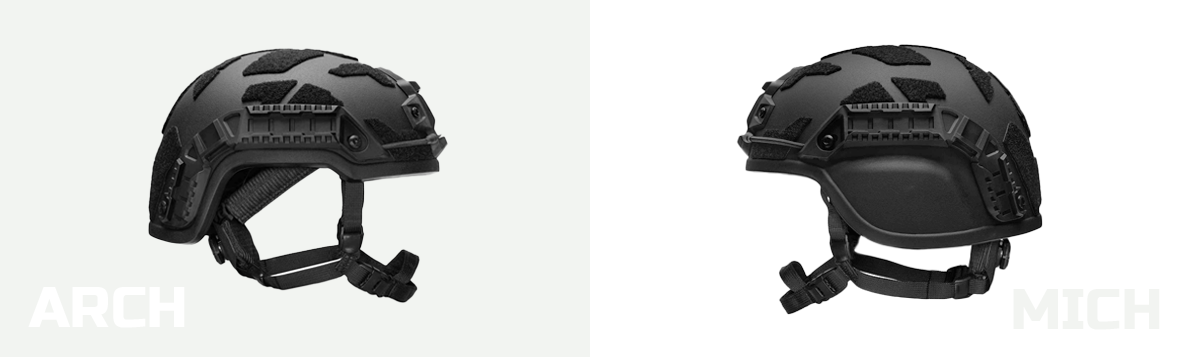
• Don’t focus only on weight: 1.4 kg in a MICH is not the same as 1.4 kg in a FAST - their profiles and balance differ.
• Don’t skip proper fitting: a quality helmet includes replaceable pads and straps for accurate adjustment.
How to choose a helmet for a specific mission
• Recon or patrol: lightweight helmets like FAST or ARCH for maximum mobility.
• Defensive positions: MICH or ACH - greater coverage and higher impact resistance.
• Communication tasks: models with high cuts for headphones (High Cut).
Tip from Sapsan-Service
Before buying, perform a “combat fit test”: fasten the straps, lean forward, turn your head, take a few steps or squats. If the helmet doesn’t slip or cause pressure - that’s your size.
Conclusion
Helmet size is not just a number - it’s a part of your survival system. Accurate sizing determines not only comfort but also the effectiveness of ballistic protection. Measure carefully, use the chart, check the fit - and let every movement be confident.